


India has some of the world’s oldest healing traditions, and two of the best known are Varma and Ayurveda. Many people assume they are the same, but they are not. At Sundaramasan, we often hear, “Is varma treatment the same as Ayurveda?” Here’s a simple answer.
What Is Varma?
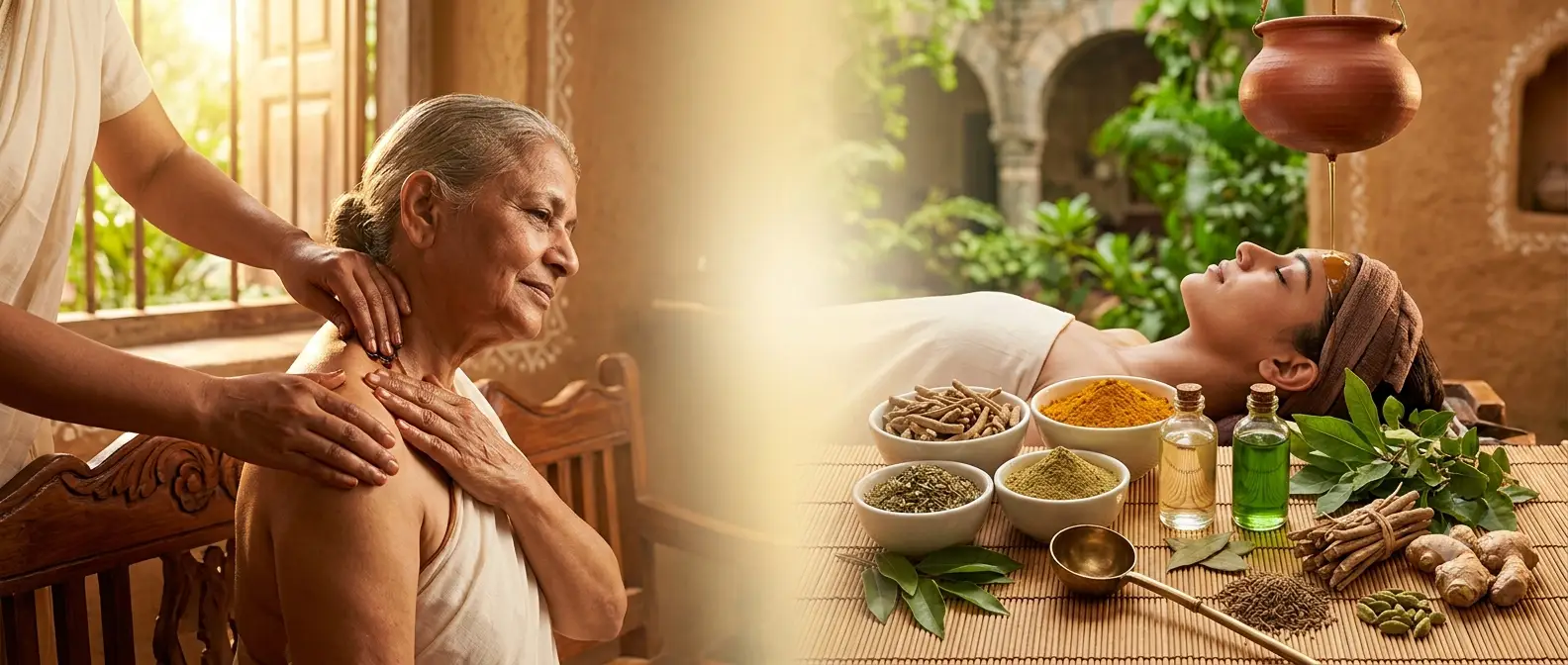
Varma is a healing art from Tamil Nadu, linked to the Siddha system of medicine. It is based on the belief that the body has 108 varma points where life energy gathers. A trained practitioner presses and stimulates these points to release blockages, ease pain, and support the body’s natural healing.
- Hands-on techniques such as pressure and massage
- Mostly medicine-free, though medicated oils may be used
- Often chosen for neck, back, and joint pain and stiff muscles
- Needs an experienced practitioner, as accuracy matters
What Is Ayurveda?
Ayurveda, “the science of life,” is over 3,000 years old. It holds that health depends on balancing three doshas: Vata (movement and nerves), Pitta (digestion and body heat), and Kapha (strength, structure, and immunity). An Ayurvedic doctor assesses your body type and suggests herbs, food, daily habits, and cleansing therapies.
Varma vs Ayurveda: Side-by-Side Comparison
| Aspect | Varma | Ayurveda |
| Origin | Tamil Nadu (Siddha) | Ancient India (Vedic) |
| Core principle | Flow of energy through 108 points | Balance of three doshas |
| Main method | Manual stimulation, massage | Herbs, diet, lifestyle, detox |
| Common use | Pain, stiffness, mobility | Digestion, skin, stress, lifestyle conditions |
| Medicines | Minimal | Extensive herbal formulations |
Key Differences
- Focus: Varma works on energy points, while Ayurveda works on overall balance of body, mind, and lifestyle.
- Method: Varma is largely touch-based, while Ayurveda combines medicines, diet, and therapies.
- Conditions: Varma is common for pain and movement problems, while Ayurveda suits long-term wellness.
- Personalization: Varma is tailored to the affected area, while Ayurveda is tailored to your dosha.
Can They Work Together?
Yes! They are partners, not rivals. For example, someone with back pain can get varma therapy to ease stiffness, and follow Ayurvedic advice on food and daily habits to recover faster.
Which Should You Choose?
Varma: for neck, shoulder, back, or joint pain, stiffness, or a preference for hands-on care without medicine.
Ayurveda: for a full health plan, help with food habits, stress, or skin, and long-term wellness.
Not sure? An experienced practitioner can assess your condition.
Important Things to Remember
- Traditional therapies complement, but don’t replace, modern medical care for serious or emergency conditions.
- Choose a trained, experienced practitioner.
- Share any conditions, medications, or injuries.
- Results vary, and consistent care matters more than a single session.
Final Thoughts
Varma and Ayurveda are both valuable parts of India’s healing heritage, but they are distinct. Varma is a hands-on therapy centered on vital energy points, while Ayurveda is a broad system of herbs, diet, and lifestyle built around dosha balance. Understanding the difference helps you make a more informed choice about your health.
FAQs
1. What is the difference between varma and Ayurveda?
Varma is a hands-on therapy that works on 108 vital energy points to ease pain. Ayurveda uses herbs, diet, and lifestyle to balance the three doshas.
2. What problems can varma treatment help with?
It is commonly chosen for neck pain, back pain, joint stiffness, and limited movement, using skilled touch rather than internal medicine.
3. Can varma and Ayurveda be used together?
Yes. Varma relieves pain and improves mobility, while Ayurveda supports recovery through diet and herbal care.
SEO Meta Title
Varma vs Ayurveda: Key Differences Explained | Sundaramasan
Meta Description
Confused between varma and Ayurveda? Learn how varma treatment differs from Ayurveda, where they overlap, and which suits you. Visit Sundaramasan.